
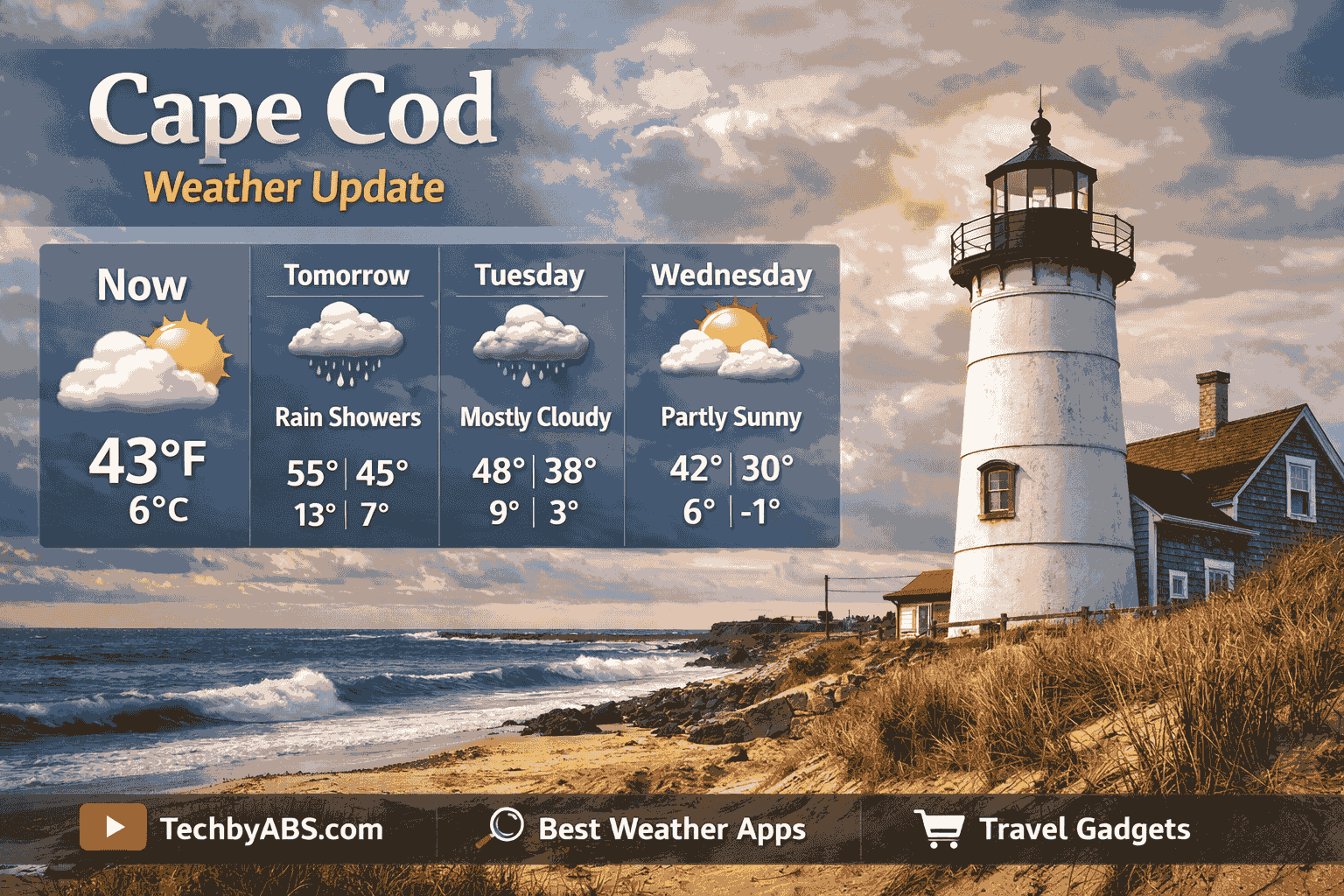
 Weather forecasting has improved dramatically over the past few decades thanks to modern technology. Coastal regions like Cape Cod depend heavily on accurate forecasts because weather conditions can change quickly due to ocean influences. Today, advanced technologies such as satellites, artificial intelligence, weather radar, and mobile apps help meteorologists predict weather patterns with greater accuracy.
In this article, we explore how technology helps predict weather in Cape Cod and why these innovations are important for residents, tourists, and businesses.
1. Weather Satellites Monitor the Atmosphere
Weather satellites are one of the most important tools used to monitor atmospheric conditions. Organizations like National Oceanic and Atmospheric Administration operate satellites that constantly observe cloud formations, storms, and ocean temperatures.
These satellites provide real-time images and data that help meteorologists track:
Storm systems forming over the Atlantic Ocean
Cloud movement near the coastline
Temperature changes in the atmosphere
Because Cape Cod is surrounded by water, satellite data plays a crucial role in predicting storms and coastal weather patterns.
According to the National Weather Service, modern radar systems help meteorologists track storms and precipitation more accurately.
2. Doppler Radar Tracks Rain and Storms
Another important technology used in weather prediction is Doppler radar. Radar systems detect precipitation such as rain, snow, and hail by sending radio waves into the atmosphere.
Agencies like the National Weather Service use Doppler radar to monitor storms approaching coastal regions like Cape Cod.
This technology helps meteorologists determine:
Rain intensity
Storm direction
Wind speed
Possible severe weather conditions
For coastal communities, radar helps issue warnings for storms and heavy rainfall.
3. Artificial Intelligence Improves Forecast Accuracy
Artificial intelligence (AI) is increasingly being used to analyze weather data. AI systems can process massive datasets from satellites, radar, and weather stations much faster than humans.
By studying historical weather patterns, AI models can identify trends and predict future conditions with improved accuracy. For Cape Cod, AI helps meteorologists forecast sudden weather changes caused by ocean currents and coastal winds.
Machine learning models also assist in predicting:
Coastal storms
Temperature fluctuations
Rainfall probabilities
4. Ocean Buoys and Sensors Collect Data
Cape Cod’s location along the Atlantic Ocean makes ocean monitoring essential. Ocean buoys and sensors collect important environmental data such as:
Sea surface temperature
Wave height
Wind speed
Atmospheric pressure
This data helps scientists understand how the ocean influences weather conditions along the coast.
The information collected from these sensors is transmitted to weather centers, where it is analyzed to improve forecasts.
5. Weather Apps Provide Real-Time Updates
Modern technology allows people to access weather forecasts instantly using mobile apps. Popular weather apps provide real-time updates and alerts to help people plan their day.
Some widely used weather apps include:
AccuWeather
The Weather Channel
Weather Underground
These apps gather data from satellites, radar, and weather stations to deliver accurate forecasts directly to smartphones.
Residents and visitors in Cape Cod rely on these apps to track storms, temperature changes, and wind conditions.
6. Supercomputers Run Weather Models
Weather forecasting requires enormous computing power. Supercomputers analyze billions of atmospheric data points to create forecast models.
These models simulate how weather systems move and develop over time. Meteorologists use these simulations to predict:
Storm paths
Temperature trends
Rainfall patterns
Coastal weather changes
Advanced computing has significantly improved the accuracy of long-term forecasts.
Conclusion
Technology has revolutionized weather forecasting, especially in coastal regions like Cape Cod. Satellites, radar systems, artificial intelligence, ocean sensors, and mobile apps all work together to provide accurate weather predictions.
These innovations help meteorologists monitor the atmosphere and predict weather changes before they happen. For residents, fishermen, tourists, and businesses in Cape Cod, reliable weather forecasts are essential for safety and daily planning.
As technology continues to advance, weather predictions will become even more precise, helping communities better prepare for changing environmental conditions.